
Kamal Kishore’s Visit to Haiti: The United Nations Renews Its Commitment to Disaster Prevention and Protection
30 septanm 2026
Against a backdrop of persistent humanitarian and security crises, Mr. Kishore’s visit reflects recognition of Haiti’s sustained efforts to strengthen disaster prevention and preparedness.

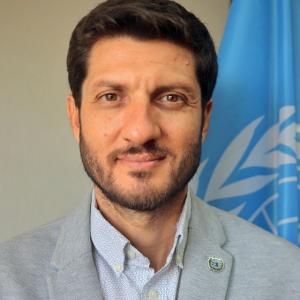
Mr. Kamal Kishore, Special Representative of the United Nations Secretary-General for Disaster Risk Reduction and Head of the United Nations Office for Disaster Risk Reduction (UNDRR), paid an official visit to Haiti on 22 and 23 September 2026. This high-level mission aimed to strengthen dialogue with national authorities, international partners and the United Nations system on the country’s priorities for disaster prevention, preparedness, and risk reduction.
During his stay, Mr. Kishore met with the Minister of the Interior and Territorial Communities, Mr. Paul Antoine Bien-Aimé, accompanied by the Director General of Civil Protection, Mr. Emmanuel Pierre. He also held discussions with international cooperation partners and the United Nations Country Team in Haiti. These meetings provided an opportunity to share progress, examine persistent challenges and reaffirm the need for coordinated action to better protect exposed populations and territories.
The mission also highlighted lessons learned from the work carried out in Cap-Haïtien under the Making Cities Resilient 2030 initiative, with support from UNDRR, UNESCO and the Directorate General of Civil Protection. This process helped identify needs related to financing, the protection of critical infrastructure, preparedness and community inclusion, while strengthening dialogue between municipal authorities and national institutions.
Against a backdrop of persistent humanitarian and security crises, Mr. Kishore’s visit reflects recognition of Haiti’s sustained efforts to strengthen disaster prevention and preparedness, particularly through implementation of the national roadmap for the “Early Warnings for All” initiative (EW4All). During Hurricane Melissa, early warning systems and anticipatory action mechanisms functioned even though investment in anticipatory action represented less than 2% of total humanitarian assistance. Despite the constraints facing institutions and communities, these advances demonstrate the country’s determination to continue strengthening its resilience capacities.
“Haiti has demonstrated that prevention delivers results. The next step is to build on this progress and make disaster risk reduction an integral part of everything we do in the country, from humanitarian action to development and peacebuilding. Anticipating impacts before they occur is the best way to protect communities, their schools, their hospitals and their livelihoods,” said Mr. Kishore. The visit also confirms UNDRR’s commitment to supporting Haiti in implementing the Sendai Framework for Disaster Risk Reduction 2015–2030. In this context, the Ministry of the Interior and Territorial Communities was called upon to continue the steps already undertaken, particularly those related to securing financing from the Green Climate Fund, in coordination with the Ministry of the Environment.
The national implementation plan for 2024–2027 covers all four pillars of early warning systems under the coordination of the Directorate General of Civil Protection. Progress to date includes the initial testing of mobile alerts. UNDRR is also continuing its cooperation with the DGPC, the National Centre for Geospatial Information and the Hydrometeorological Unit to improve the quality, sharing and use of risk data.
The discussions provided an opportunity to review the needs, priorities and vulnerabilities Haiti continues to face, particularly in relation to climate risks and natural hazards. Immediate concerns include the rainfall deficit associated with the El Niño phenomenon, which, according to the Ministry of Agriculture, could reduce agricultural yields and worsen food insecurity. The discussions also reaffirmed the commitment of the United Nations, and UNDRR in particular, to supporting the strengthening of institutional capacities, improved governance and risk-data sharing, as well as the planned deployment of DELTA Resilience. This tool would help consolidate data on disaster losses and better inform risk assessments, impact-based forecasts and investment decisions.
At the conclusion of his visit, Mr. Kamal Kishore, Special Representative of the United Nations Secretary-General for Disaster Risk Reduction, reaffirmed the United Nations’ determination to continue supporting the Haitian authorities and their partners. This commitment is intended to provide sustained support for national efforts in disaster prevention, preparedness and risk reduction, while helping strengthen the resilience of institutions, territories and communities.
END
Media Contact
Luis Burón Barahona
Communication and Public Information Assistant
UNDRR – Regional Office for the Americas and the Caribbean
Jefferson Belizaire
Associate Development Coordination Officer
Programme Communications and Advocacy – Nations Unies Haïti
jefferson.belizaire@un.org | (509) 36 12 8609

Jefferson Belizaire



Antite LONI ki ap patisipe nan inisyativ sa a
Objektif nou ap sipòte ak inisyativ sa a


