Istwa
26 awout 2026
National Celebration of Peacebuilding Week 2026 in Haiti
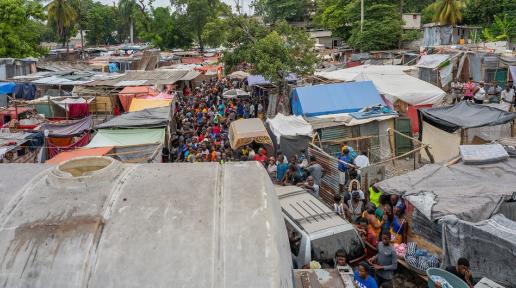
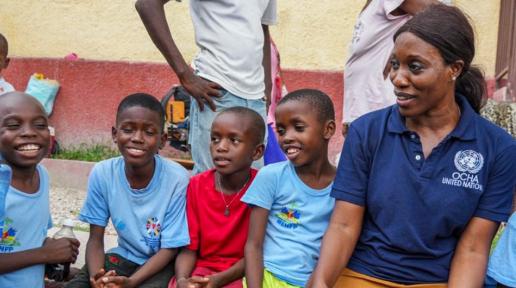
On June 23, 2026, the Secretariat of the United Nations Peacebuilding Fund in Haiti organized, at Pétion-Ville, a day of exchanges and dialogue as part of the first edition of Peacebuilding Week, held from June 22 to 26, 2026 on the theme: "Partnership for Innovation, Inclusion and Impact".Bringing together members of the United Nations System in Haiti, civil society organizations and media professionals, this celebration aimed to promote innovative and inclusive approaches and increase the impact of conflict prevention and sustaining peace efforts in Haiti.The discussions held during the launch of the Peacebuilding Week highlighted both the challenges facing Haiti and the essential role of the media and civil society in promoting sustainable and inclusive peace in the country.Media and civil society: concrete priorities for peaceParticipants focused on issues related to citizenship and community dynamics, highlighting the persistence of violence, social inequalities and the importance of strengthening civic engagement and responsibility. The exchanges were based in particular on the experience of the "Jèn Yo La project", implemented in partnership with UNESCO, the Ministry of Youth, Sports and Civic Action (MJSAC) and the Ministry of National Education and Vocational Training (MENFP), which served as a concrete example to illustrate approaches to promote social cohesion and citizen participation.The role of the media was also identified as a key lever for peacebuilding. Discussions highlighted the need to further adapt media content and approaches to the needs of communities, expand women's voices, build the capacity of media professionals, and invest in media infrastructure. The participants also proposed the development of a charter of good practices and a more sustained dialogue between the media and local populations.Structural challenges at the heart of the discussionsThe discussions also highlighted the importance of land conflicts and urban dynamics. Participants noted the weight of precarious urbanization, forced displacement without adequate alternative housing, as well as poor land distribution and parceling in aggravating social tensions.In terms of local governance, the contributions called for creating more spaces for dialogue between leaders and populations, strengthening transparency between authorities and citizens and consolidating institutional structures. The idea of a national project involving civil society organizations, in order to pool resources and maximize the impact of PBF investments, was also put forward.Youth, Violence Prevention and Access to OpportunitiesFaced with persistent insecurity in the neighborhoods, several programmatic avenues have emerged: deepening the analysis of community dynamics, strengthening support for young people, consolidating approaches to violence prevention and creating more economic opportunities.Participants also stressed the importance of access to education, gender mainstreaming and better access to public services.
Sport was mentioned as a potential vector of social cohesion and peace. Finally, the discussions insisted on the need to create spaces for dialogue between young people and the Haitian National Police (HNP), while strengthening relations between the HNP and community organizations.Collective mobilization for national and sustainable solutionsBeyond the visibility given to peacebuilding interventions, this day was a space for dialogue to raise the concerns and proposals of partners, the media and civil society. In this way, it has contributed to bringing together public institutions, the United Nations, partners and communities around common priorities: inclusion, violence prevention, citizen participation, local governance, youth and strengthening the bond of trust between populations and institutions.In a context marked by significant security, social and institutional challenges, Peacebuilding Week 2026 recalled that building sustainable peace in Haiti relies on strong partnerships, active listening to communities and responses adapted to local realities.
Sport was mentioned as a potential vector of social cohesion and peace. Finally, the discussions insisted on the need to create spaces for dialogue between young people and the Haitian National Police (HNP), while strengthening relations between the HNP and community organizations.Collective mobilization for national and sustainable solutionsBeyond the visibility given to peacebuilding interventions, this day was a space for dialogue to raise the concerns and proposals of partners, the media and civil society. In this way, it has contributed to bringing together public institutions, the United Nations, partners and communities around common priorities: inclusion, violence prevention, citizen participation, local governance, youth and strengthening the bond of trust between populations and institutions.In a context marked by significant security, social and institutional challenges, Peacebuilding Week 2026 recalled that building sustainable peace in Haiti relies on strong partnerships, active listening to communities and responses adapted to local realities.